
Our Differentiator: PPE-Driven Solar Panel Cleaning
At Clean Solar Solutions America (CSSA), solar panel cleaning is not treated as “exterior washing.” We operate in a PV electrical environment, and we manage that reality with disciplined work planning, professional documentation, and a PPE system aligned to recognized U.S. safety expectations.
Our teams are ISCA-certified and execute work using processes consistent with OSHA 29 CFR 1910 Subpart I (Personal Protective Equipment) hazard-assessment logic and electrical protective equipment controls, with methods informed by NFPA 70E electrical safety principles.
Solar panel cleaning primary goal: Reduce electrical risk to people and fire risk on assets.
Secondary benefit: improved PV performance, reduced risk of permanent damage to solar arrays from hotspotting and a cleaner finish.
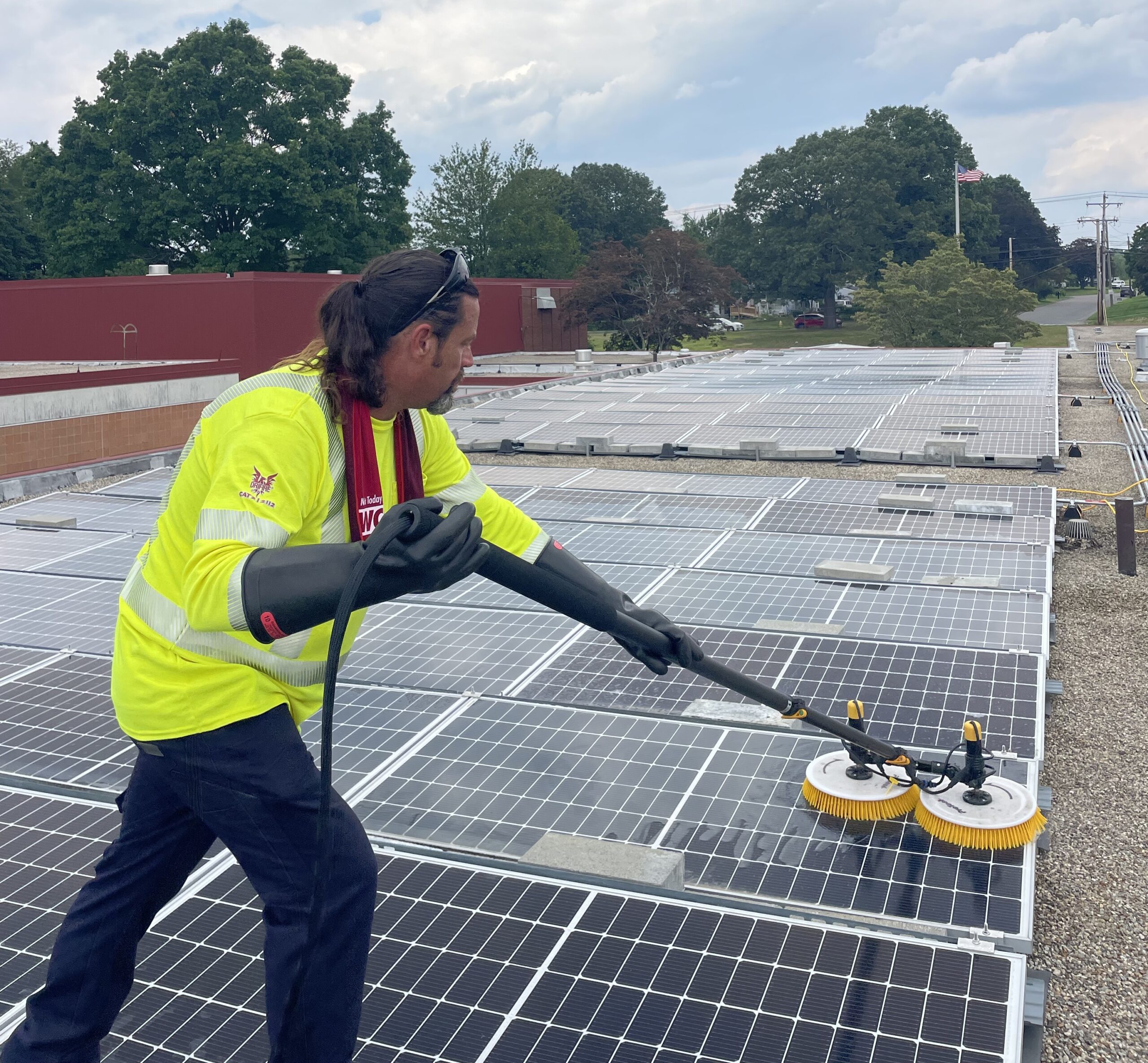
What We Mean By 'PPE-Driven'
OSHA’s general industry PPE rules require employers to assess hazards, select appropriate PPE, and ensure it is used.
CSSA builds that mindset into every PV scope we execute. We do not sell “a clean.” We deliver a controlled job—planned, equipped, documented.
For commercial clients, this matters because contractor incidents do not just harm people—they create operational disruption, vendor disputes, and liability exposure. Our PPE systems are part of a broader risk control framework designed to satisfy professional scrutiny from facilities teams, O&M managers, and asset owners.
CSSA’s PPE Standard: What We Wear and Why It Matters
Below is a practical overview of the PPE categories we treat as non-negotiable on PV work (final PPE selection is always task- and site-specific based on the hazard assessment).
Class 0 rubber insulating gloves (electrical shock protection)
Where the hazard profile calls for voltage-rated hand protection, CSSA specifies Class 0 rubber insulating gloves—and we treat their inspection and testing requirements seriously.
OSHA’s electrical protective equipment standard includes voltage requirements for rubber insulating equipment (Class 0 maximum use voltage 1,500V DC) and sets mandatory testing intervals (including every 6 months for rubber insulating gloves after first issue). OSHA also requires insulating equipment to be inspected before each day’s use, with gloves receiving an air test as part of that inspection.
Why this matters on PV: PV systems are electrical assets. Even when you are not opening enclosures or disturbing connectors, professional contractors manage exposure risk as a matter of competence and duty of care.
Electrical hazard footwear (boots)
OSHA requires protective footwear when needed to protect against foot hazards—including certain electrical hazards that remain after other controls are applied.
CSSA specifies footwear appropriate to the task environment, typically aligning with consensus standards used in U.S. safety programs (OSHA’s framework references protective footwear meeting standards such as ASTM F2413 for safety-toe footwear; selection depends on the hazard profile).
Why this matters on PV: stable footing, predictable traction, and electrical hazard considerations support safer movement around arrays, ladders, roof surfaces, and equipment zones.
Head protection (hard hat / safety helmet)
OSHA requires head protection where there is a potential for head injury from impact/falling objects and calls for helmets designed to reduce electrical shock hazard where electrical exposure exists.
Where electrical shock reduction is appropriate, CSSA specifies head protection aligned with ANSI/ISEA classifications; OSHA guidance describes Class E head protection as proof tested at 20,000 volts.
Why this matters on PV: roof work and industrial environments can introduce overhead hazards, tool drops, and impact exposures, and head protection selection should reflect the electrical environment.
Arc-rated eye and face protection (including arc-resistant face shields)
OSHA requires appropriate eye/face protection where hazards exist.
Where the hazard profile warrants additional thermal/arc protection, CSSA uses arc-rated eye/face protection systems that align with U.S. consensus testing and marking practices (for example, ASTM specifications for determining arc rating of eye/face protective products and ANSI/ISEA Z87.1 compatibility requirements).
Why this matters on PV: professional PV work treats electrical hazard management as real, even when output gains are not the primary objective.
FR / arc-rated (AR) clothing
CSSA specifies FR/AR clothing as part of our electrical-environment PPE posture, selected and used based on the hazard assessment. ASTM publishes performance specifications for flame resistant and electric arc rated protective clothing used where workers are exposed to flame and electric arc hazards.
Why this matters on PV: in a risk-managed program, PPE is a last line of defense—but it must be credible, specified, and enforced.
PPE Discipline - Maintained & Documented
PPE is not “an optional purchase.” It is a required operational system.
CSSA’s electrical protective equipment approach emphasizes:
-
Inspection before each day’s use (and after suspected damage) for insulating equipment, including glove air tests
-
Test intervals that meet OSHA’s requirements for rubber insulating gloves (including the 6-month interval once issued for service)
-
Clear scope boundaries so our teams are not pushed into unsafe, undefined activities
For commercial clients, we can support vendor onboarding workflows with professional documentation (e.g., COI on request, JHA, scope confirmation, and insurance-compliant photographic reporting).
Why This Differentiates CSSA From “Standard Cleaners”
Many companies sell solar cleaning as a simple service. CSSA delivers PV field work performed by trained professionals who understand:
-
PV risks (shock/thermal hazards, access hazards, and preventable failure modes)
-
Why documentation matters for asset owners and O&M teams
-
How disciplined controls reduce incident likelihood and downstream liability noise
If your organization is an asset owner, O&M provider, EPC, or facilities team, CSSA is built to operate in your world: method statements, site rules, reporting, and a safety posture aligned with recognized U.S. frameworks.
The Educator Behind The Standard
CSSA is led by Steve Williams, a multi award winning global solar cleaning safety educator and founder of the International Solar Cleaning Academy (ISCA). Our PPE standards, training posture, and PV risk controls are driven from the top—not improvised in the field.
You can read all about Steve's solar career here.
Solar Panel Cleaning PPE FAQs
Do you wear Class 0 gloves on every job?
PPE is selected through a hazard assessment. Where voltage-rated protection is indicated, we use Class 0 rubber insulating gloves and follow OSHA inspection/testing expectations.
How often are insulating gloves tested?
OSHA’s electrical protective equipment standard specifies rubber insulating gloves must be tested before first issue and every six months thereafter once issued for service, with additional conditions requiring retest.
Do you follow NFPA 70E?
Our work planning is informed by NFPA 70E electrical safety principles to reduce shock and arc-flash related risk in electrical environments.
Is PPE your only safety control?
No. PPE is the last line of defense. We also rely on defined scope boundaries, access planning, and controlled methods consistent with OSHA’s hazard-assessment approach.
Request a PV Cleaning Quote That Stands Up To Scrutiny
If you need a PV cleaning contractor that operates with a serious PPE system, professional documentation, and a safety posture designed for commercial expectations, request a quote today.