
Solar Panel Coating With Diamon-Fusion®
Protect the glass side of your solar investment with a hydrophobic coating designed to make treated surfaces easier to clean. CSSA combines professional panel cleaning, a module-specific suitability review and controlled Diamon-Fusion® application planning with documented site reporting.
CSSA solar cleaning photograph for context; the photograph does not depict Diamon-Fusion® being applied or a treated installation. ISCA Accredited CompanySolar-specific safety procedures
Make future cleaning less of a fight with the glass
Diamon-Fusion® is an ultra-thin, transparent hydrophobic treatment that bonds to glass. Its maker markets it for both new and existing solar panels.
The water-repellent surface is intended to make soiling and water deposits less tenacious and future cleaning easier. That can be valuable where crews face recurring dust, water spots, bird fouling or other environmental exposure. A coating is a maintenance tool: rain patterns, local soiling, array tilt and weather still determine when panels need cleaning.
CSSA brings the coating into a wider asset-care program: competent access, appropriate surface preparation, application records and a solar panel cleaning report that captures other visible concerns found during the visit.
Read Diamon-Fusion's solar product overview →An easier-clean surface, backed by a sensible maintenance plan
The product maker positions Diamon-Fusion® as a glass-protection and easier-clean treatment. CSSA evaluates its value for the actual array rather than promising a fixed output gain.
Less tenacious deposits
The hydrophobic surface can make some water-borne contaminants and ordinary soiling easier to remove. Persistent bird or cement deposits may still require specialist cleaning.
Plan future cleans
Coating can fit a recurring cleaning program. We assess the array’s tilt, exposure, source of deposits, water supply and access so the proposed aftercare is realistic.
Keep light transmission in view
Deposits on module glass can affect production. Cleaner glass may help preserve the intended optical path, but a site-specific energy increase cannot be assumed from coating alone.
Document the condition
CSSA records the scope, module identity, preparation, application and visible concerns. Reporting gives owners and O&M teams a usable treatment history.
Performance claims: we do not promise self-cleaning, no future cleans, a percentage uplift in generation, scratch-proof glass or protection against module damage. Any expected financial return should be assessed against site-specific soiling and O&M data.
Coating starts with a module and site review
The product is the final step in a controlled process. We scope compatibility, personnel, environmental conditions and ongoing care first.
Check
Identify module brand/model, existing glass or anti-reflective coating, warranty instructions, access and site restrictions. Confirm written permission when required.
Prepare
Clean thoroughly, identify staining and damaged modules, then follow the manufacturer’s required preparation and environmental conditions.
Apply
Arrange an appropriately trained application team using the approved product method and controls. Scope and availability are confirmed for each project.
Report
Record treated sections, product/batch where available, photos, observations and aftercare instructions. Propose a practical follow-up schedule.
CSSA will confirm the permitted application route and the responsible applicator for your project before making a coating commitment. Existing factory treatments, module instructions or site conditions may make coating unsuitable.
Check two different warranties before coating
The solar module warranty and the Diamon-Fusion® coating warranty are separate documents.
A coating manufacturer’s warranty does not replace a panel manufacturer’s warranty or guarantee that either will approve an unrelated future claim.
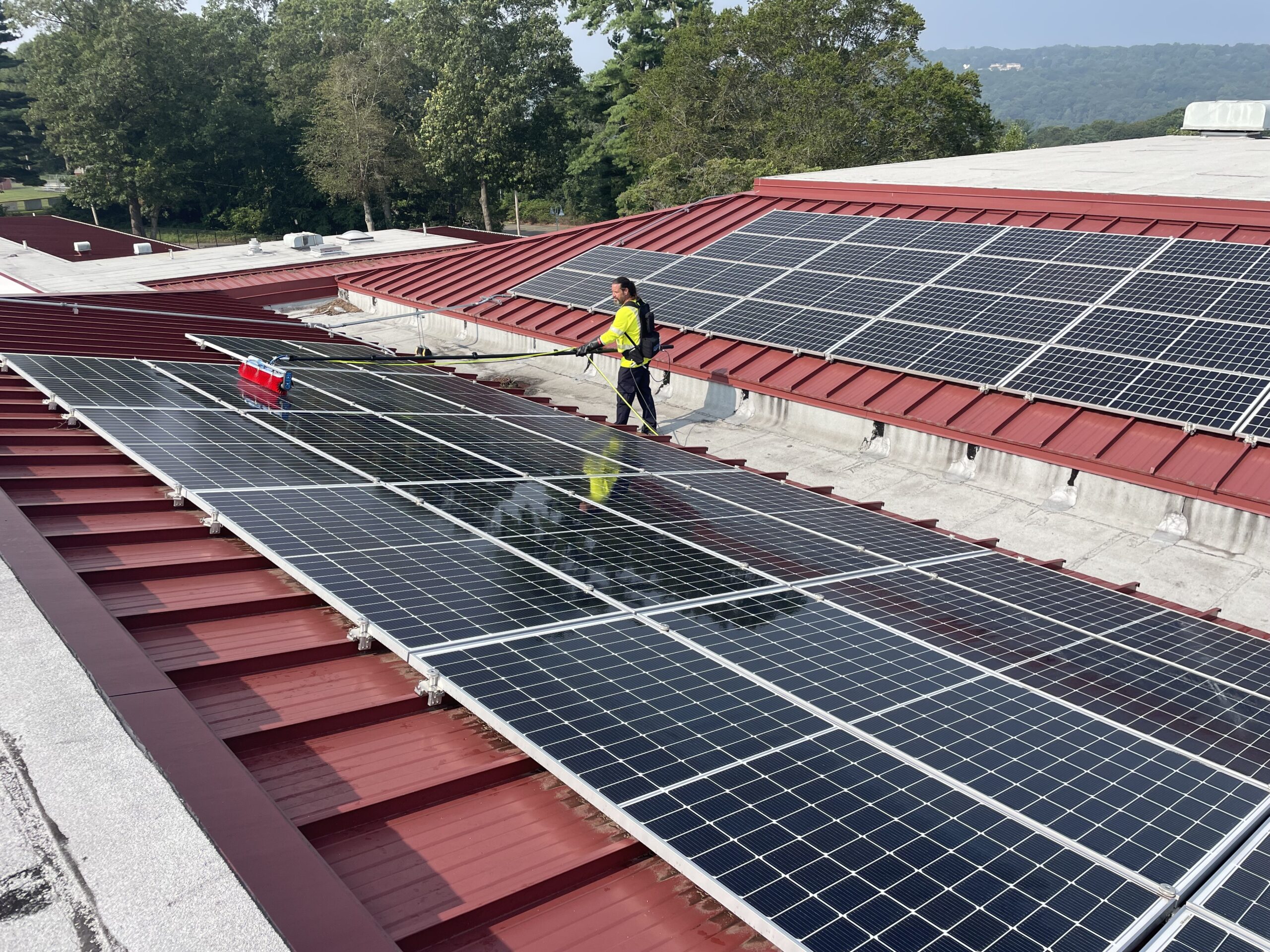
CSSA rooftop solar cleaning work. The photo does not depict a Diamon-Fusion® application or coated modules.
Where Diamon-Fusion® has been used
DFI publishes examples across architectural glazing, building windows, glass furnishings and vehicle windshields. These demonstrate use of the glass-treatment technology in other settings. They are DFI or its partners’ projects, not CSSA projects or evidence of solar-panel energy gains.
U.S. Army HMMWVs
DFI reports that its coating was applied to the windshields of more than 100 U.S. Army Humvees through PAS Armored. This is a windshield application, not a solar-panel project.
Read DFI’s project account →Museum of the Future
DFI reports that approximately 75,000 square feet of exterior glazing received factory-applied Diamon-Fusion®.
Read DFI’s project account →Target Headquarters
DFI documents restoration and treatment of first-floor windows and exterior granite at Target’s headquarters.
Read DFI’s project account →Apparel manufacturer
DFI describes restoring and coating more than 80,000 square feet of glass at an unnamed athletic-apparel company’s campus. The client is not named in DFI’s account.
Read DFI’s project account →California Academy of Sciences
DFI documents treatment of entrance glass and says the client later requested solar-panel work. The account does not confirm the panels were coated.
Read DFI’s project account →The Old Tiffany Building
DFI reports coating more than 700 insulating glass units at 15 Union Square West, a residential building formerly associated with Tiffany & Co.
Read DFI’s project account →Two further DFI glass projects
- KFC/Pizza Hut building in Florida — DFI reports factory coating of more than 600 square feet of insulated window glass.
- Marriott Vacation Club Villas — DFI reports treating sandblasted glass tabletops at several properties.
Each example concerns the glass surface identified above. Naming an organization or venue does not imply it endorses CSSA, uses CSSA, or achieved the same result on solar modules.
Where a coating review can make sense
The clearest business case comes from understanding the cost of recurring cleaning and the site’s actual soiling pattern.
CSSA can scope residential rooftops, commercial arrays and larger ground-mounted sites. A water-side or floating PV installation would need an additional environmental, access and product-discharge review before any coating method could be considered.
Owners of large sites may prefer a limited treated area alongside a comparable uncoated area, with consistent cleaning and production monitoring, to test the business case under their own conditions.
Discuss a controlled trial →Solar panel coating FAQs
Does Diamon-Fusion® make solar panels self-cleaning?
No. The hydrophobic treatment is designed to help shed water and make future cleaning easier. Persistent dust, bird deposits or local industrial contamination can still require scheduled cleaning.
Will coating increase my system's power output?
Cleaner glass can support light transmission, but the effect of coating on output depends on the original soiling, existing glass treatment, climate and maintenance. CSSA will not promise a percentage gain without a site-specific measurement plan.
Does the coating void the panel warranty?
It cannot be answered for every module in advance. We review the panel maker’s current instructions, existing factory layers and any written permissions required, as well as DFI’s coating terms, before recommending application.
What are Diamon-Fusion®'s warranty periods?
DFI’s solar-panel product page advertises lifetime coverage for residential applications and 15 years for commercial applications. Coverage depends on the current written warranty, qualifying application and its conditions; these are coating warranties, not a guarantee of solar module performance.
Can it be applied to existing solar panels?
DFI markets coating for new and existing panels. We first assess the module’s glass, coatings, condition and manufacturer requirements. We will not apply a coating where suitability cannot be established.
Should we coat an entire solar farm immediately?
A portfolio owner may prefer a defined pilot area and comparable untreated control, then evaluate measured cleaning labor, soiling and generation before deciding on wider rollout.
Does coating replace specialist removal of lichen or heavy bird soiling?
No. Existing bonded deposits need their own assessment and appropriate removal before any surface preparation and coating. After coating, severe bird activity can still create future cleaning needs.
Find out if Diamon-Fusion® fits your solar assets
Share your module manufacturer and model, site location, array size, soiling concerns and maintenance schedule. We will review coating compatibility, delivery and the case for a pilot or wider application.