
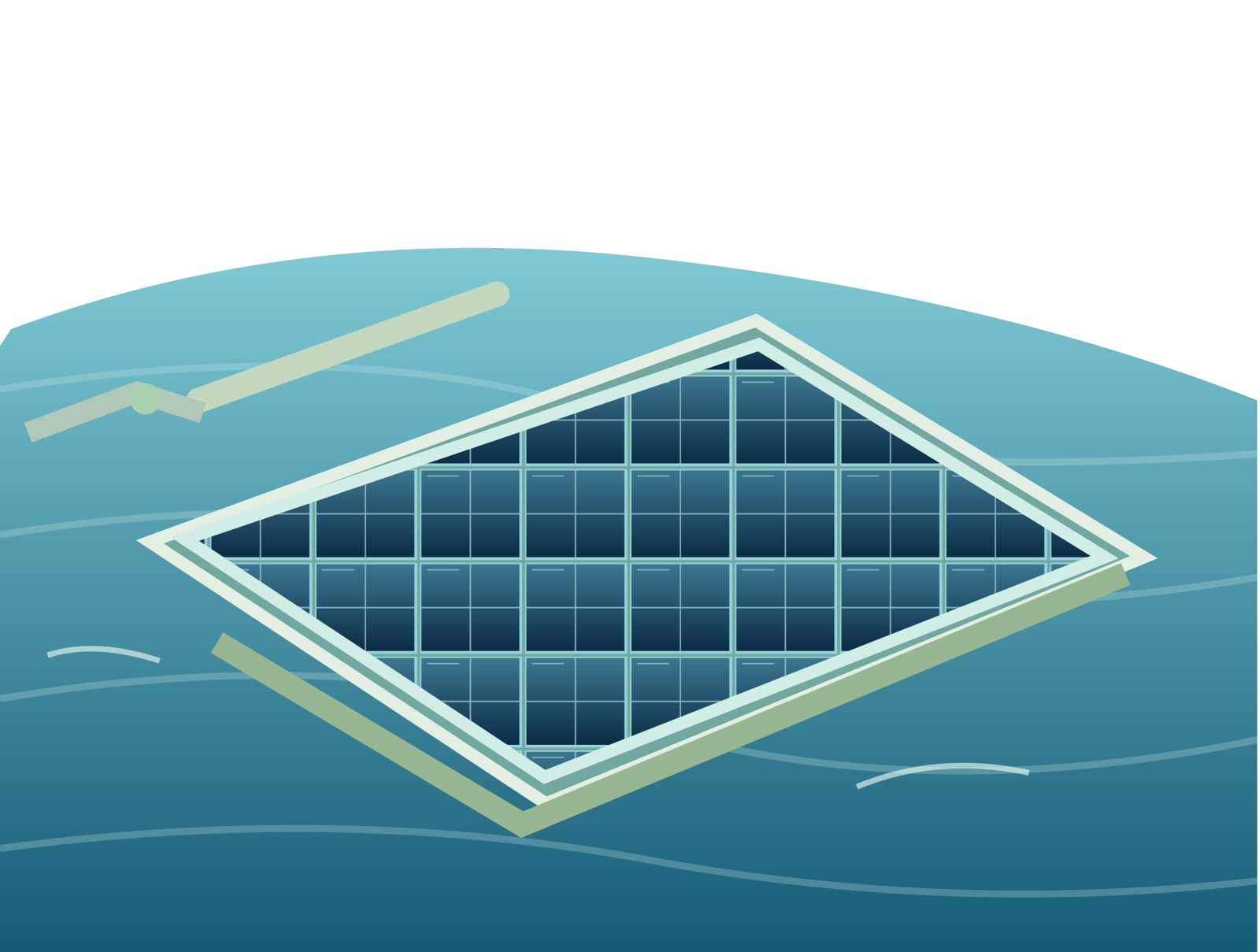
Floating Solar Panel Cleaning, Planned for Water and Safety
Floating PV brings solar cleaning into an active water environment. CSSA scopes each installation around safe access, the floating structure, site permissions and water protection—then combines the clean with clear field observations for the asset owner and O&M team.

Floating solar is a site-specific assignment
A floating array's access, movement and water conditions can be very different from a roof or ground-mounted solar farm.
Before proposing a cleaning method, CSSA reviews the platform or float system, module guidance, permitted routes, shore interface, weather and water levels. The owner and O&M team define operational restrictions, environmental conditions and emergency arrangements. We agree a work scope that matches those realities.
Tell us about your installation →Four questions before anyone mobilizes
The array sits within a living, working water site
The work plan addresses both the modules and the setting around them. Requirements vary across reservoirs, industrial ponds and other permitted floating PV locations.
Approved routes
We review approved walkways, pontoons, watercraft or other access arrangements with the site operator. No assumption that floats or modules can carry cleaning personnel.
Water protection
Water-source rules, product restrictions, runoff, debris control and equipment containment are assessed before selecting a cleaning method.
Floating components
The layout, module mounts, floats, movement and cable routes influence the allowable work area and the observations recorded for follow-up.
Bird activity
Bird fouling and nesting can create localized cleaning needs. Wildlife permissions and restrictions are reviewed before disturbing nests or applying treatments.
CSSA cleaning teams do not certify flotation, mooring or electrical integrity. A visual concern is recorded and referred to the responsible qualified specialist.
The method follows the installation
We determine equipment, people, access and products only after reviewing the installation documentation and site permissions.
Approved platform routes
Where the system has designated walkways or service platforms, we assess their permitted loads and working limits with the owner before planning cleaning from them.
Watercraft-assisted work
Where appropriate, watercraft access requires a separate method and competent operators, launch arrangements, rescue planning and approval from the site controller. Availability is assessed per project.
Compatible tools
Tools and any mechanized option must suit the module, floats, water environment and manufacturer's instructions; we do not presume that conventional solar-farm equipment fits.
Stop-work boundary: work pauses if weather, water conditions, access or electrical concerns move outside the agreed safe method. A new plan is required before proceeding.
Environmental controls are part of the cleaning specification
A reservoir, irrigation pond or drinking-water facility can impose different restrictions. CSSA plans to the actual rules of that water body.
We check permissions, permitted water sources, module manufacturer guidance and the site's environmental controls. Additives, detergents or chemical treatments are not assumed suitable. If they are proposed, they require specific product review and approval for the installation and water setting.
The owner and relevant authority determine applicable permissions. We do not present cleaning as permission to discharge products, disturb protected wildlife or operate watercraft.
The visit becomes a useful observation point
Our floating solar panel cleaning reports can help the asset team see conditions encountered during the agreed work.
We can record soiling patterns, module-condition concerns, security observations, bird activity and visible float or cable concerns. Findings are tied to agreed array identifiers or zones where a usable site map is supplied.
- Areas cleaned and access method used
- Photos and visual condition observations
- Specific flags passed to the O&M contact
- Agreed actions and handover record
These are visual observations, not an engineering inspection, electrical test, environmental assessment or certification of the floating structure.
Solar training plus site-specific water safety
Floating PV combines live solar equipment with water access. The Job Hazard Analysis, briefing and emergency plan must fit both.
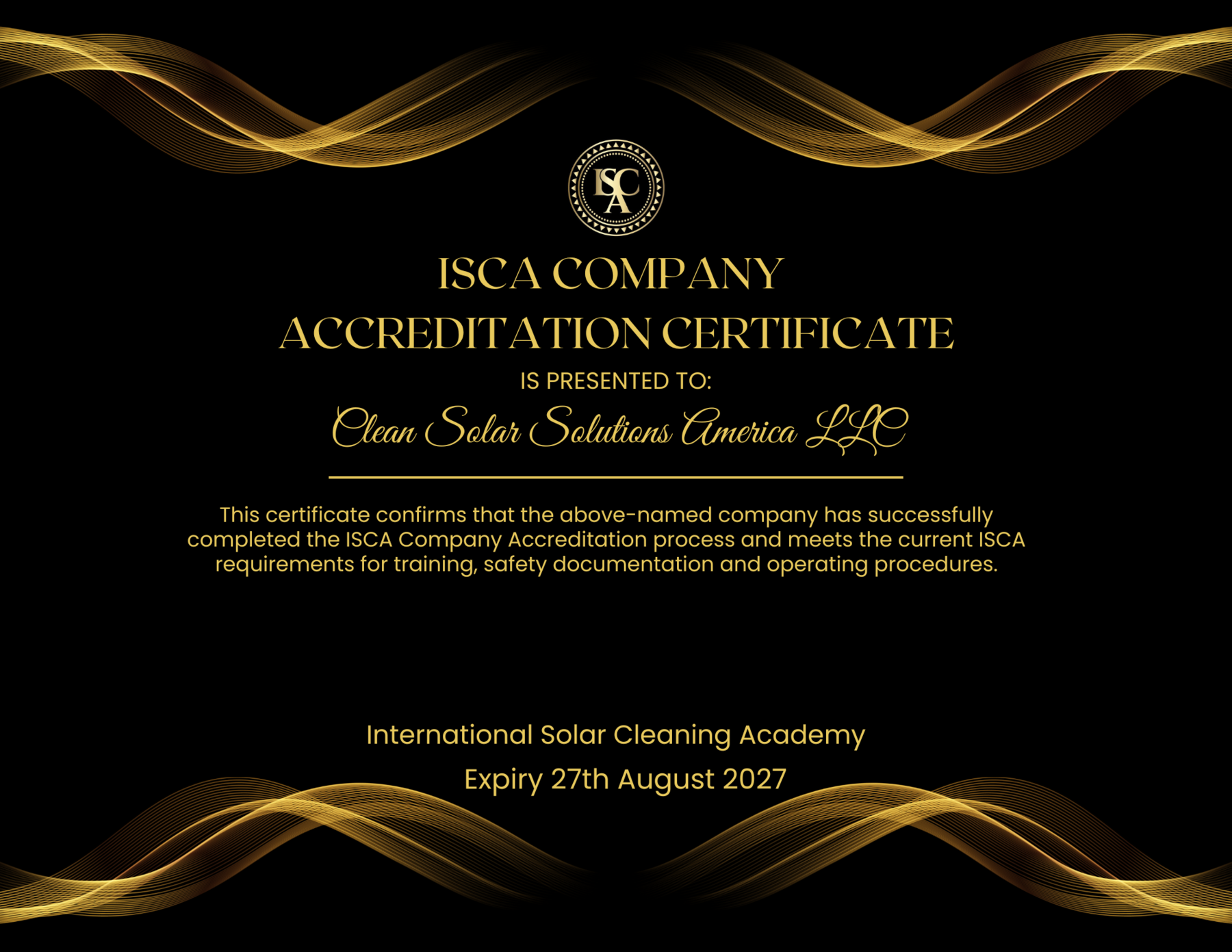
CSSA is an ISCA Accredited Company with documented training, safety documentation and operating procedures. For each project we coordinate with the owner on access, electrical boundaries, weather and water conditions, life-safety arrangements and stop-work criteria.
- Solar-cleaning competence and task-specific briefing
- Approved access and water rescue arrangements where required
- Electrical awareness around wet environments
- Clear limits of the cleaning scope and escalation route
Company accreditation supports contractor due diligence; it does not transfer the site owner's or other duty holders' responsibilities.
Assess. Agree. Clean. Report.
Assess
Review array drawings, float system, water body, access and site restrictions.
Agree
Set method, equipment, permits, water controls, JHA and rescue arrangements.
Clean
Perform the approved scope with trained personnel and stop-work authority.
Report
Hand over cleaning records, photos and agreed visual observations.
Floating Solar Cleaning Questions
Can floating solar panels be cleaned like rooftop panels?
Floating PV has different access and water-site constraints. We review the float system, approved routes, module guidance, water restrictions and emergency response before recommending equipment or a method.
Do your technicians walk on the floating modules or floats?
We do not assume either can bear personnel. Access depends on the manufacturer's designated service routes, load ratings and the site operator's approval.
Do you use boats to clean floating solar panels?
Watercraft-assisted access may be an option for some sites. It requires a separate approved method, suitable operators and equipment, site permissions and a water rescue plan. We assess feasibility and availability for each project.
What products are used near the water?
Product selection is site-specific. We check module and float guidance, water-use restrictions and any required approvals before proposing additives or treatments; they are never assumed acceptable simply because a surface needs cleaning.
Can you inspect the floats, anchors and electrical system?
We can record visible concerns encountered during the agreed cleaning scope for a qualified specialist to evaluate. We do not certify flotation, mooring or electrical integrity.
Can you remove bird nests?
Bird activity and fouling can be documented. Whether a nest can be disturbed or removed depends on the species, timing and applicable permits; any separate removal scope requires the necessary permissions first.
What information should I send for a quote?
Send the water-body location and use, array capacity and drawings, float and module system details, service-access rules, water restrictions, bird fouling or other soiling concerns, a target date and the reporting you need. We can then discuss a feasible scope.
Let's plan the floating PV clean around your site
Tell us about the water body, float system, access provisions, soiling and environmental rules. We will review the site requirements before proposing a cleaning approach.