
Utility-Scale Solar Panel Cleaning, Planned for the Whole Site
Ground-mounted solar farms demand more than a cleaning crew. CSSA combines site-specific methods, solar-trained personnel and structured field reporting to support the asset owners and O&M teams responsible for performance, safety and accountability.

The cleaning method should fit the solar farm
No two utility-scale PV sites have the same soiling, module geometry, access or water constraints.
CSSA assesses the project before recommending an approach. We consider fixed-tilt or tracker layout, row spacing, ground conditions, access lanes, array condition, the site operator's procedures and how the work fits around other site activity. That planning helps establish a practical scope for a single site or portfolio.
Send us your site details →This is a company experience figure across sectors, not a claim that 9 million utility-scale modules were cleaned on a single project or in the United States.
From one row to a whole portfolio, the details matter
Large sites turn small planning gaps into major operational problems. We build the work scope around the factors that affect safe, repeatable execution.
Different deposits
Dust, pollen, agricultural residue, bird fouling and site-specific contamination can vary across blocks and seasons. Cleaning frequency is evaluated against actual conditions.
Array layout
Fixed-tilt arrays, trackers, row ends, module frames and clearance influence tool choice, movement and the safe working envelope.
Water and access
Water source, quality and delivery, internal roads, weather, staging and simultaneous maintenance activity are part of the plan.
Work completed
Site zones, scope, observations and photographs need to be useful to the people managing the asset after the crews leave.
Cleaning frequency and expected energy impact depend on measured soiling, season, rainfall, tariff and site economics. We do not promise a fixed generation gain from washing.
Manual, mechanized or robotic where suitable
The best technique is the one compatible with the array and site rules. We assess equipment availability, manufacturer instructions and safe operating limits before committing to a method.
Specialist manual cleaning
Useful for varied layouts, local problem areas or controlled work around sensitive interfaces. The work plan addresses tools, water, movement and environmental conditions.
Mechanized cleaning
Can be considered for repetitive ground-mounted layouts when row clearance, terrain, equipment movement and module compatibility support it.
Robotic options
Assessed for compatible sites where equipment can operate within the array's physical and electrical constraints and the agreed operational plan.
A site plan your operations team can review
We establish what is being cleaned, how the team will move, what requires protection and what evidence your team wants at handover.
A utility-scale JHA addresses the tasks actually being performed. Site rules, water logistics, coordination with O&M, weather limits and stop-work criteria are communicated before work begins.
A field inspection touchpoint for your O&M team
Each cleaning visit is an opportunity to record visual observations and create a traceable account of work performed.
CSSA can structure reporting by asset, block or zone using the identifiers supplied by the client. Alongside cleaning records, we capture relevant fire-risk, security, performance and bird activity observations for review by the people qualified to act on them.
- Scope and locations completed
- Condition and soiling observations
- Supporting photos and follow-up flags
- Priority items escalated through the agreed channel
Field observations are visual and within the agreed scope. They are not an electrical test, certified fire-risk assessment or guarantee of energy output. A report can support a maintenance record; claim decisions remain with insurers or warranty providers.
Safety belongs in the bid and the field plan
A solar farm is a live operational environment. Trained personnel and site-specific controls matter as much as cleaning capacity.
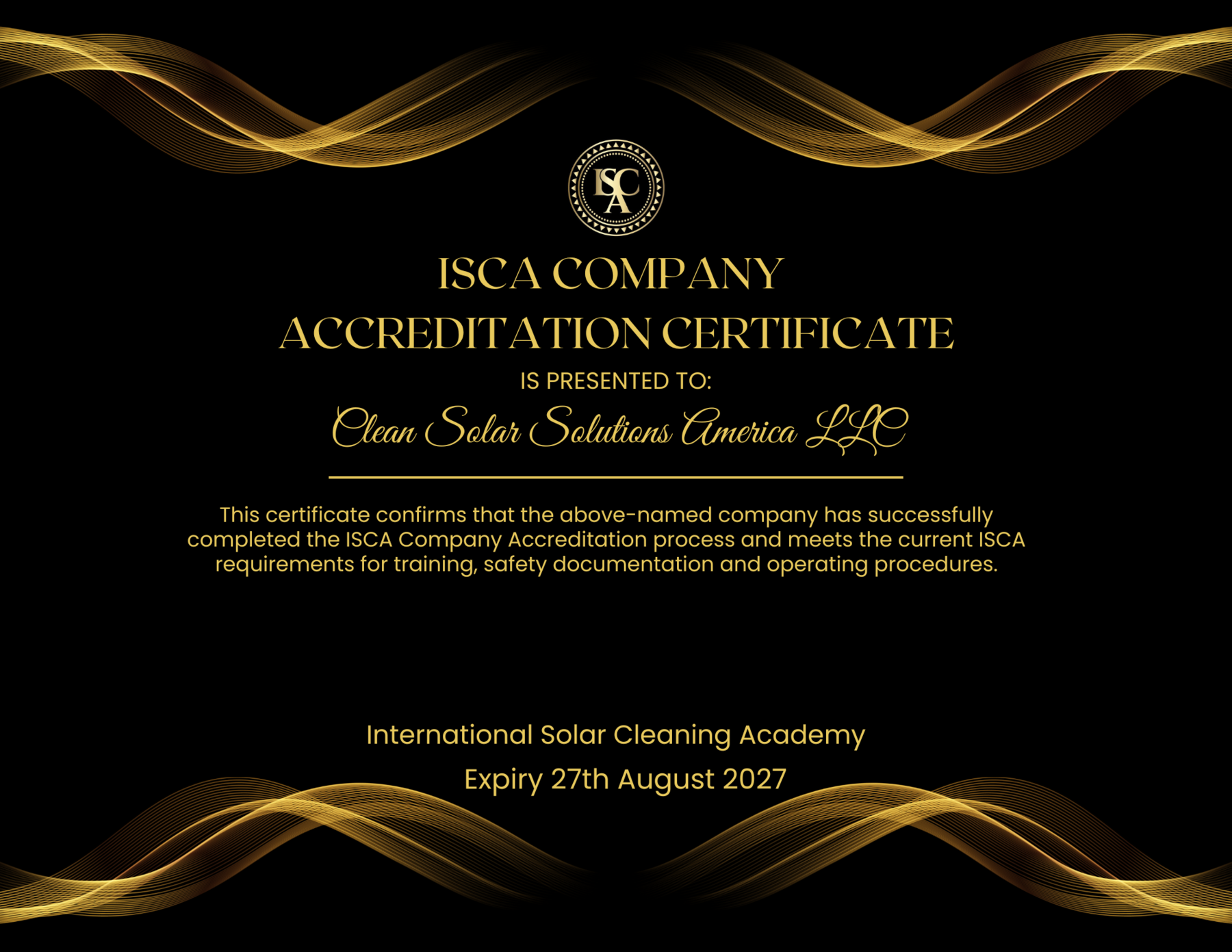
CSSA is an ISCA Accredited Company. Our accreditation covers training, safety documentation and operating procedures; the certificate is available to inspect. Our personnel receive task-appropriate solar-cleaning training, and the method is adapted to the site and client procedures.
- Site-specific Job Hazard Analysis and briefing
- Planned vehicle, pedestrian and equipment movement
- Electrical awareness around energized PV components
- Weather limits, stop-work decisions and incident escalation
Accreditation supports contractor due diligence. It does not remove the responsibilities of the site owner, employer or other duty holders.
Assess. Plan. Clean. Report.
Assess
Review layout, soiling, site access, safety information and reporting goals.
Plan
Agree the method, resources, block sequence, JHA, water plan and O&M interface.
Clean
Trained crews execute the agreed scope and respond to conditions in the field.
Report
Deliver a clear record of areas cleaned, observations and follow-up items.
Utility-Scale Solar Cleaning Questions
Do you clean utility-scale solar farms across the USA?
CSSA considers utility-scale projects across the United States. Mobilization, available personnel, site size, schedule and access are assessed for each enquiry; we do not imply a local crew is based in every state.
Do you use robotic solar panel cleaners?
Robotic and other mechanized methods can be considered when the module, mounting system, terrain, geometry and project logistics support them. We do not assume every solar farm is suitable for a robot.
How often should a solar farm be cleaned?
There is no universal interval. Soiling varies with weather, season, land use, array design and location. Your O&M performance data and site economics should inform the schedule.
Can you document work by block or row?
Yes, when the scope includes the required reporting and the site provides usable identifiers or maps. We agree the level of location detail and evidence before mobilization.
Will cleaning guarantee higher output?
No. Removing soiling can address one source of performance loss, but actual energy impact depends on the site and other operating conditions. We do not guarantee a specific uplift without appropriate measurement and analysis.
What do you need to prepare a quote?
Send the site location, approximate MW or module count, array and tracker details, site map, soiling concern, water availability, target schedule, access restrictions and any reporting requirements. We can then discuss an appropriate scope.
Tell us what your solar farm needs
Share your site location, array layout, approximate size, soiling concern and reporting priorities. We'll discuss a safe, practical approach to cleaning and documentation.