
Solar Panel Cleaning Safety Built Into Every Job
Protect your people, property and solar assets. CSSA combines trained personnel, planned access, task-specific controls and class-leading reporting—helping solar companies, asset owners and commercial clients reduce avoidable risk and contractor liability.
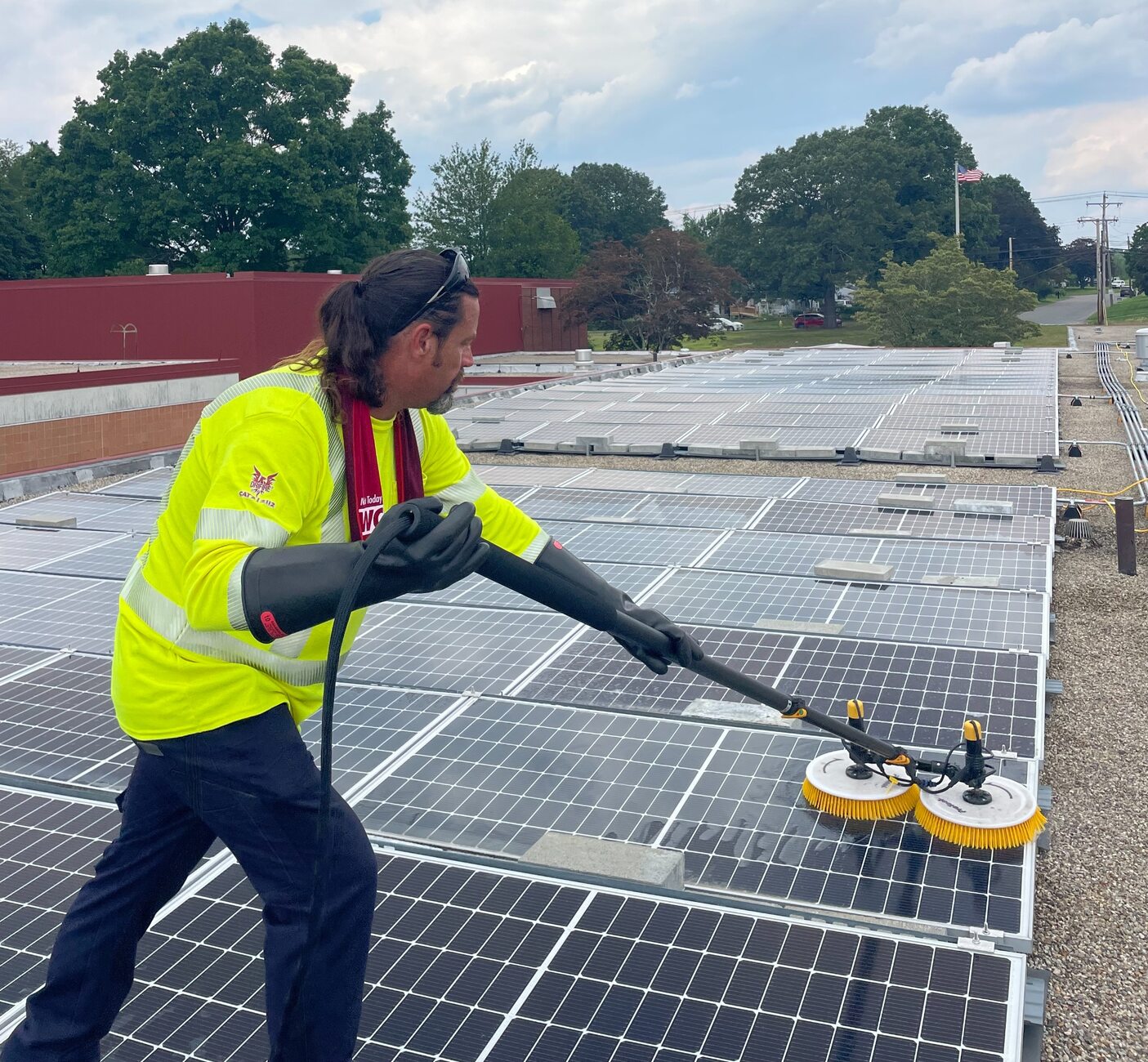
Safety Is a System—not a Hi-Vis Vest
Unverified competence, improvised access and generic paperwork can expose a client to preventable incidents, damaged assets, schedule disruption and difficult questions after the event.
CSSA treats professional solar panel cleaning as controlled work on an active asset. We plan the people, access, equipment, boundaries, weather limits and emergency response before the cleaning task begins.
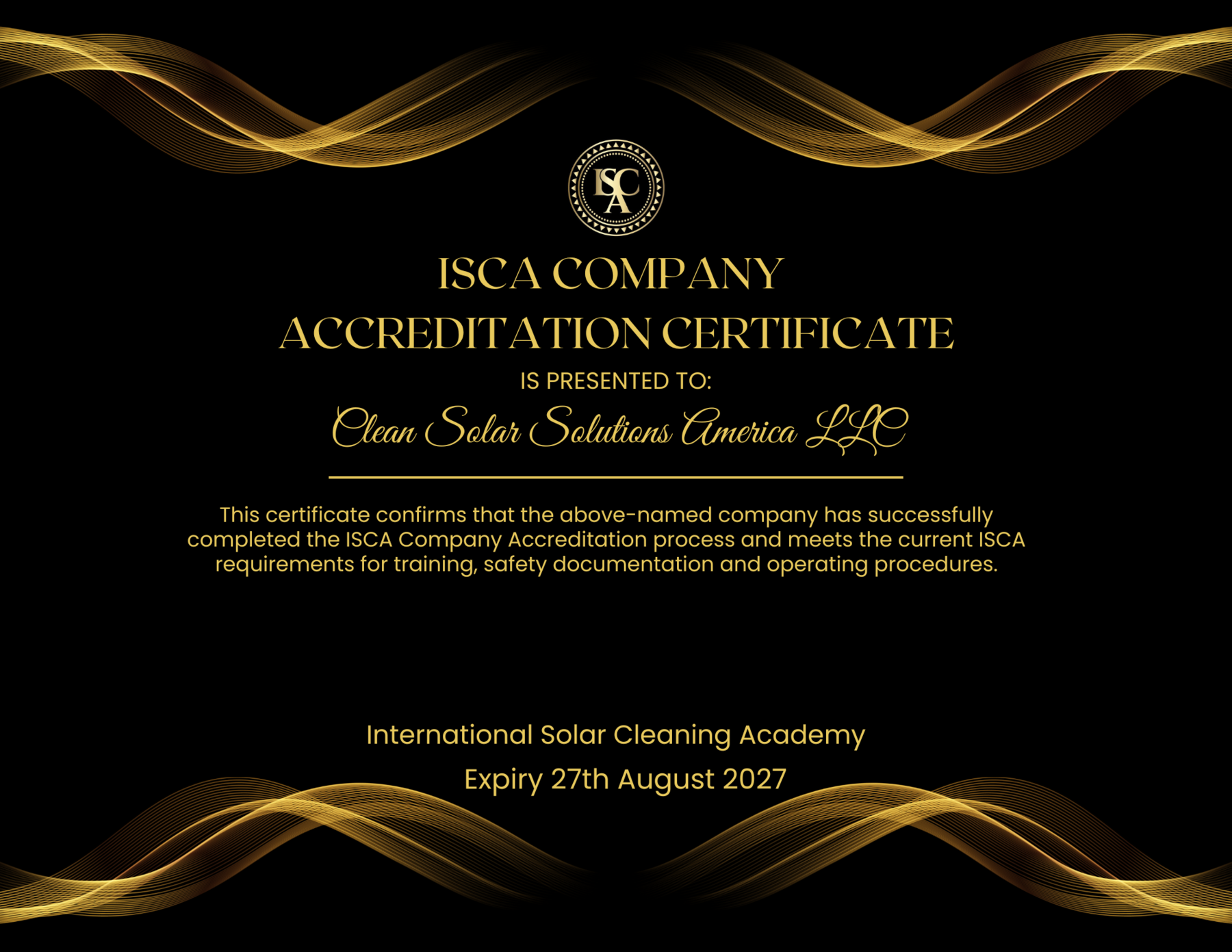

Accreditation You Can Verify
Clean Solar Solutions America has completed the ISCA Company Accreditation process and meets its current requirements for training, safety documentation and operating procedures.
Accreditation gives buyers more than a marketing claim. It provides a visible framework for assessing whether the company entrusted with a rooftop or solar site has invested in solar-specific competence and repeatable working practices.
Current certificate expiry: August 27, 2027
What Professional Solar Panel Cleaning Safety Looks Like
Good outcomes depend on more than cleaning technique. Our system connects competence, access, electrical awareness, environmental controls and documented supervision.
Task-Appropriate Training
Personnel are selected and briefed for the site, equipment and work method—not simply assigned because they can clean.
Safest Practicable Route
We establish how personnel, tools and water systems will reach the work area while controlling falls, dropped objects and unauthorized access.
Protection and Rescue
Where exposure exists, the work method defines suitable edge protection, restraint, arrest or access equipment—and a credible rescue response.
Live PV Boundaries
PV modules can remain electrically energized in daylight. Controls address damaged components, connectors, cabling, inverters, water and approach limits.
Heat, Wind and Weather
Forecasts, surface temperature, wind, lightning, hydration and changing roof conditions inform go/no-go and stop-work decisions.
People and Property
Exclusion zones, barricades, spotters and traffic or public-interface controls help protect those working below and around the operation.
One Site Does Not Fit Every Method
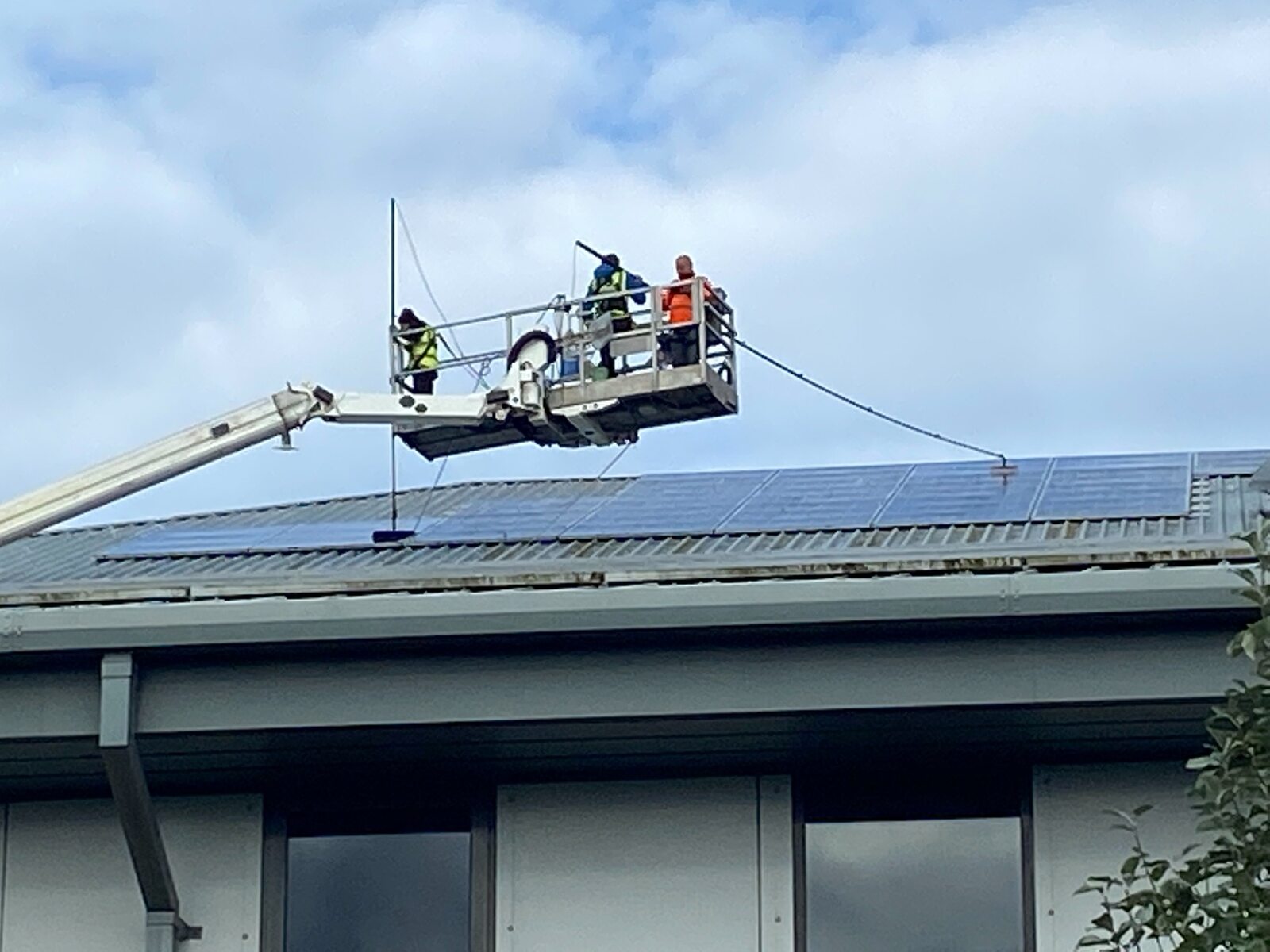
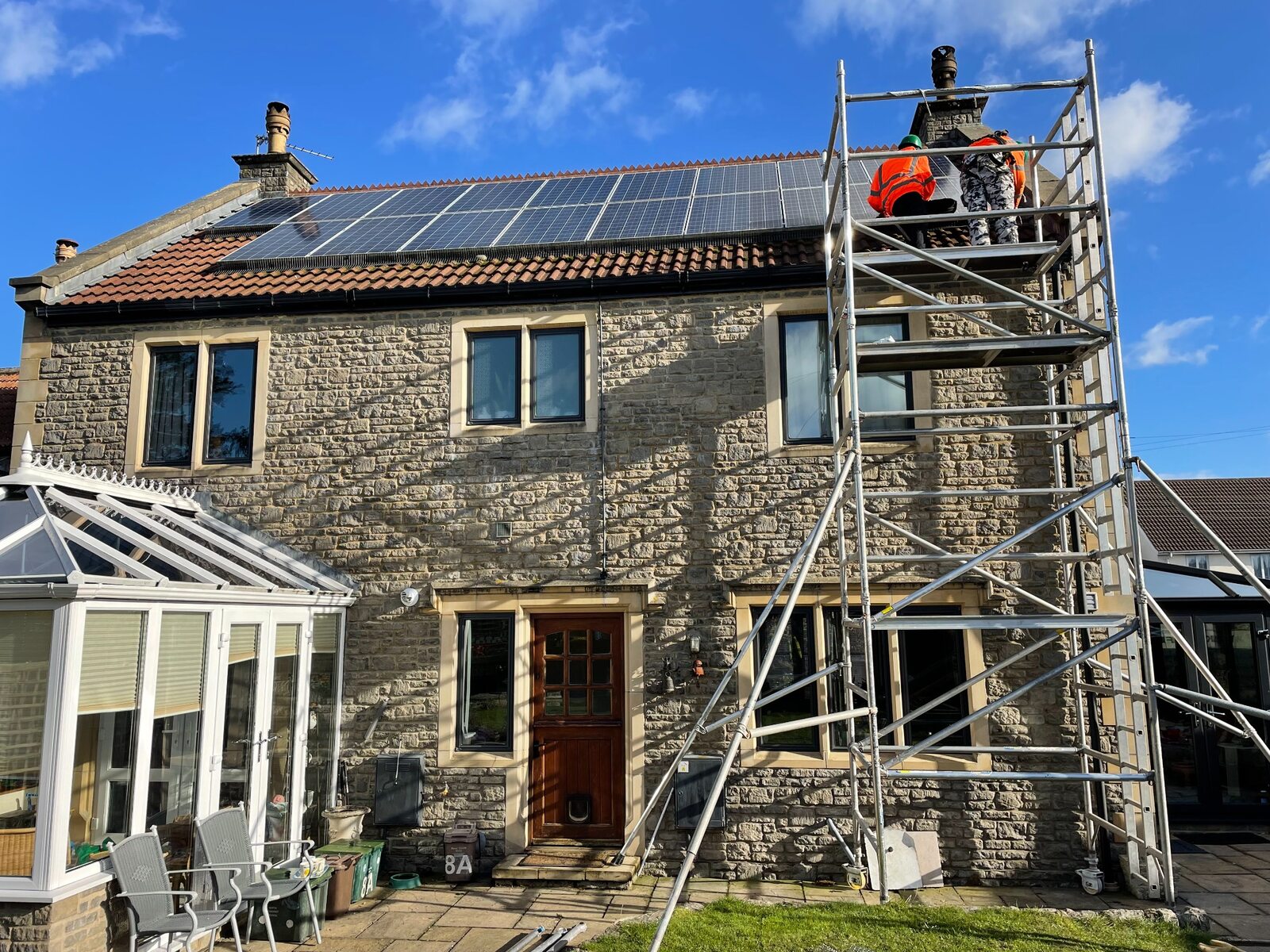
Our assessment establishes the safest practicable form of access for the work. That may involve a boom lift, scaffold, fall-restraint system, protected walkway or ground-based equipment. The method must fit the roof, array, surroundings and task.
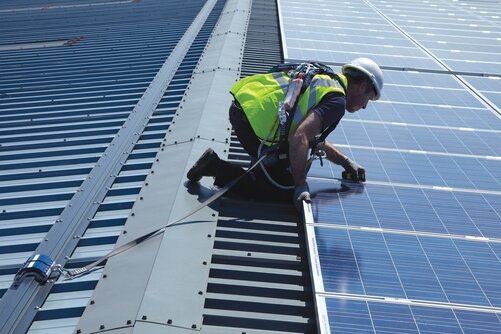
Site-Specific Solar Panel Cleaning JHAs
Our Job Hazard Analysis breaks the scope into actual tasks, identifies foreseeable hazards and records the controls required before the team proceeds.
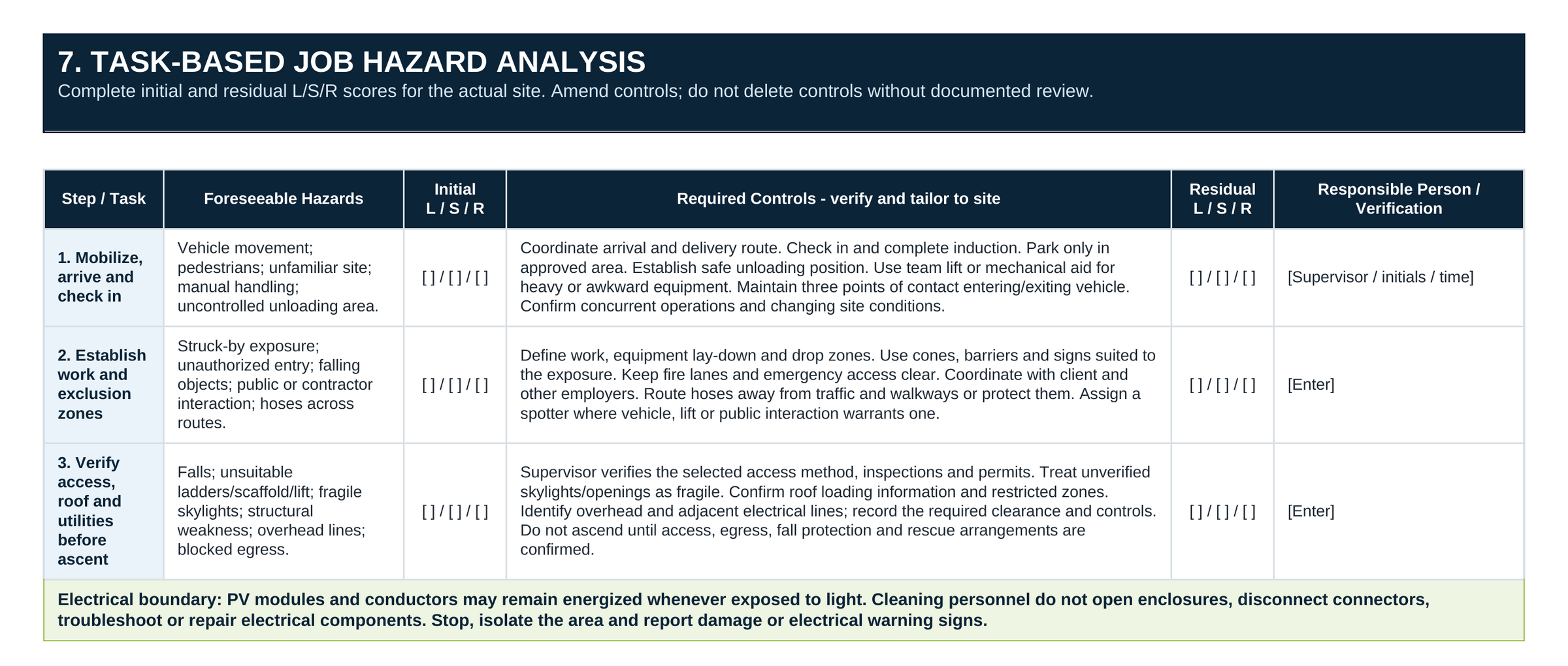
Tailored to the Actual Site
The core system covers the full work sequence. It is then adapted for the client, location, array, roof, access method, equipment, environment and simultaneous site activities.
That means the document seen by the crew reflects the work in front of them—not a generic assessment stored in an office.
Solar Cleaning Risks Need Solar-Specific Controls
A generic exterior-cleaning risk assessment can miss the interaction between work at height, water, energized PV equipment, heat and sensitive solar components.
Edges, Openings and Fragile Areas
Access routes, skylights, roof condition, slopes, edges and rescue constraints are considered before choosing the work method.
Daylight-Energized PV Systems
Water use and approach are controlled around damaged glass, exposed conductors, loose connectors, cabling, isolators and inverters.
Conditions Worth Escalating
During inspection and cleaning, we can record visible debris accumulation, damaged cabling, hotspots or other signs that may warrant qualified follow-up.
Changing Conditions
Heat stress, hot panel surfaces, wind, rain, lightning and reduced traction are monitored against defined stop-work criteria.
Panels, Coatings and Connections
Approved techniques, equipment inspection and controlled pressure help reduce the risk of cracked glass, coating damage and disturbed components.
Birds, Nests and Contamination
Droppings, nests, insects, sharp debris and protected wildlife require hygiene controls, escalation and—where necessary—authorized removal permits.
Class-Leading Reports Document More Than the Clean
Our solar panel cleaning reports create a photographic record of the work, site conditions and relevant observations—giving operations teams useful information after our crews leave.
A report may record roof or access concerns, damaged modules, unusual soiling, foreign objects, cabling observations, fire-risk indicators, security exposure and signs of degradation such as hotspotting or delamination.
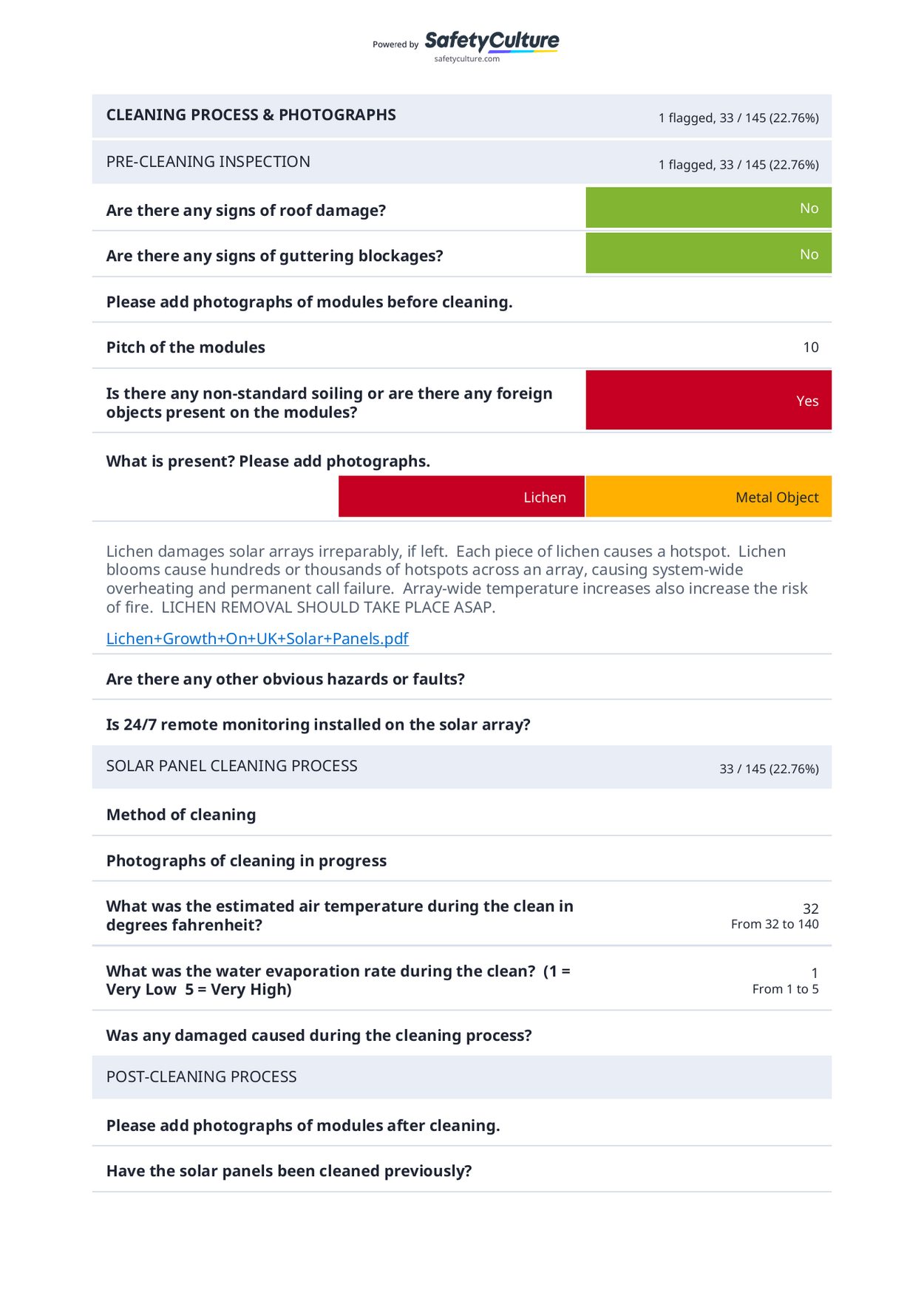
A More Defensible Contractor Decision
Price matters. So does what happens if the chosen contractor cannot demonstrate competence, planning or control.
CSSA helps procurement and site teams assemble a clearer due-diligence trail before work begins and a stronger evidence pack when the work is complete.
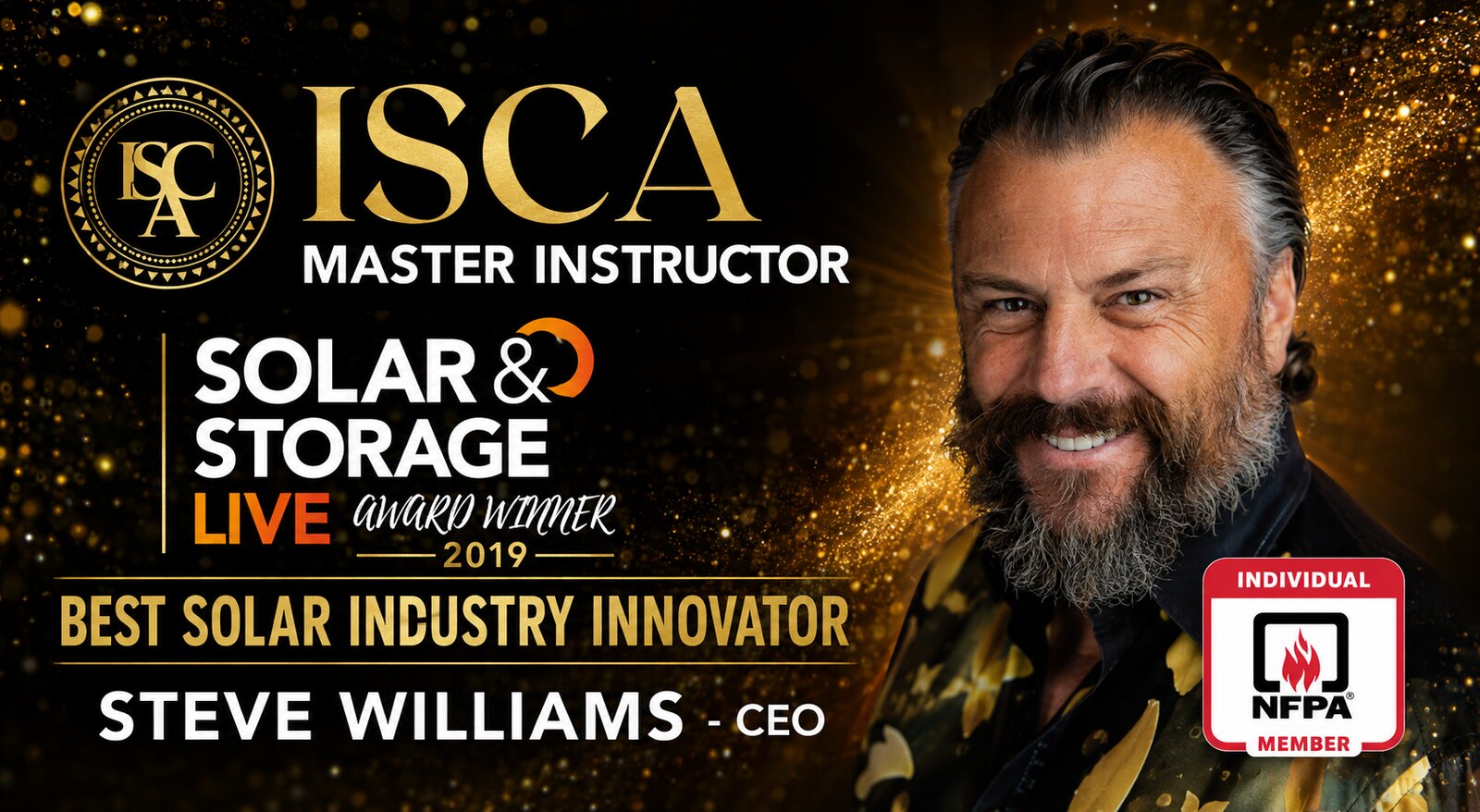
Built by Solar Cleaning Specialists
CSSA’s safety culture is led by CEO Steve Williams, whose work spans solar-cleaning training, operational practice and industry safety leadership.
That involvement helps keep practical field controls, training and reporting central to how CSSA plans and delivers solar panel cleaning.
What Clients Should Know Before Work Starts
What are the main hazards in solar panel cleaning?
Common hazards include falls from roofs or access equipment, slips and trips from hoses or wet surfaces, electrical exposure from daylight-energized PV components, heat stress, wind and lightning, dropped objects, damaged panels or cabling, biological contamination and interaction with the public or other site activities. The applicable controls depend on the site and work method.
Is cleaning solar panels dangerous?
It can be hazardous when access, competence, weather, water and live electrical equipment are not properly controlled. A trained contractor should assess the site, select a suitable method, document the hazards and controls, brief the team and stop work if conditions change beyond safe limits.
Does OSHA require a Job Hazard Analysis for solar panel cleaning?
OSHA promotes job hazard analysis as a way to identify and control workplace hazards, while specific legal duties vary with the work, employer, site and jurisdiction. Many clients also require a JHA through their own contractor-control systems. CSSA prepares task-based documentation and adapts it to applicable federal, state-plan, client and site requirements.
Do solar panels remain electrically live during cleaning?
PV modules can continue producing electricity when exposed to light. Turning off an inverter or isolator does not necessarily remove every electrical hazard at the array. Cleaning plans should account for damaged modules, connectors, DC cabling, inverters and the interaction of water with energized equipment.
What training should a solar panel cleaning contractor have?
Training should match the hazards and equipment involved. That can include solar-cleaning-specific instruction, hazard communication, electrical awareness, work-at-height and fall-protection training, lift or scaffold competence, PPE use, heat illness prevention, first aid and site-specific emergency procedures. Buyers should request evidence rather than relying on verbal assurances.
How does reporting help reduce commercial risk?
Reporting provides a traceable record of site conditions, work completed, photographs and issues escalated. That helps asset and facilities teams follow up on hazards, demonstrate maintenance activity, compare recurring findings and retain evidence for future operational, warranty or insurance discussions.
What should an asset owner request before appointing a contractor?
Request evidence of insurance, training and competency; a site-specific JHA; the proposed access method; fall-protection and rescue arrangements where relevant; equipment inspection records; electrical and weather controls; incident reporting arrangements; and a clear description of the completion report you will receive.
Put a Trained, Accredited Solar Cleaning Team on Your Site
Tell us about the array, access constraints and commercial requirements. We’ll help define a safer cleaning approach and the documentation your team needs.